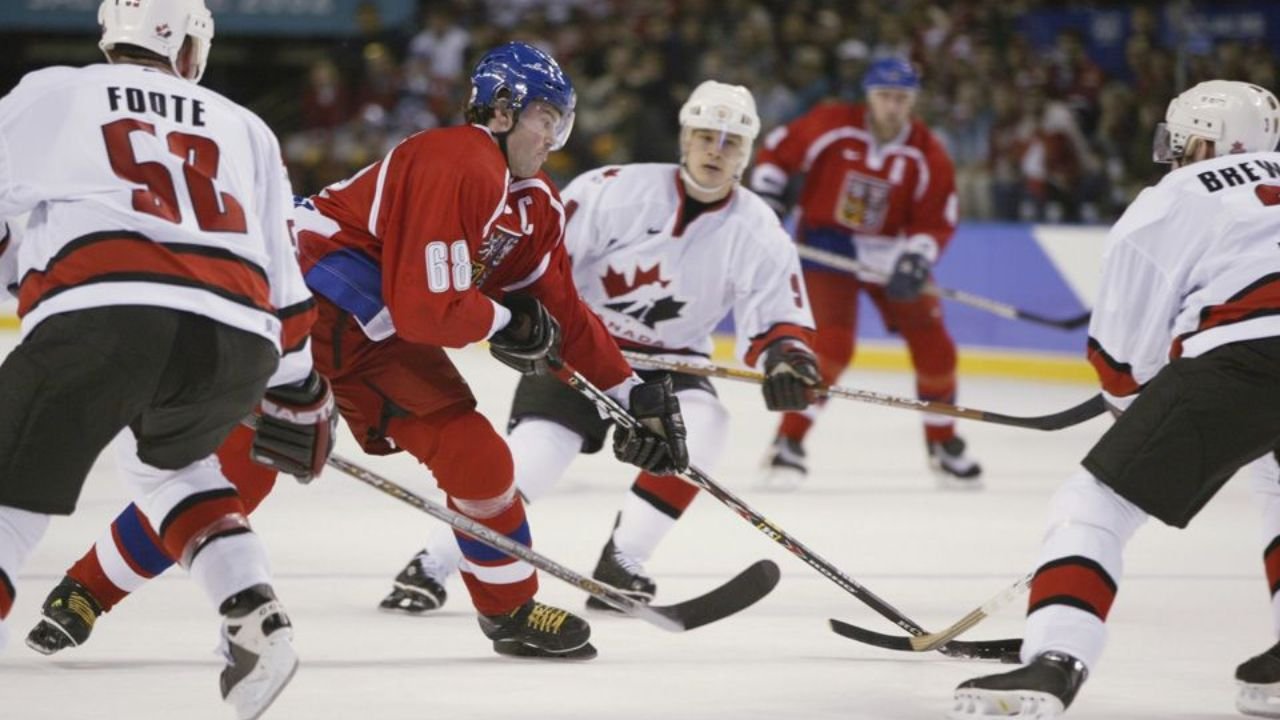
When many folks first start playing hockey, one of the many questions they have will be, How Many People Are on a Hockey Team? The sport of hockey may seem rapid, turbulent, and obscure at initial look. Players speedily jump in/out of the ice, goalies run aggressively to defend the net, in-game teams appear much bigger than they actually are. I remember viewing my first ever hockey game and being totally baffled when the amount of players on one team was clearly indicated; and the total number was 5.I remember seeing our first hockey game years ago, and being confused about how many players an official team had; and our team had 5 players.
The answer isn’t so complicated, but there are a number of important facts for every fan. A hockey team consists of goals, coach, substitutes, and players. The total number may fluctuate depending upon if you watch the NHL, international games, youth games or recreational games.
Here, we’ll dive into the specifics of hockey team sizes, roles, transfers, the nature of the game, and much more. Discussions will also take place about, for example, what is the length of a hockey game and how many periods in hockey, which can sometimes be directly linked to the understanding of the way the team will operate during a game.
How Many Players are in a Hockey Team in the Pro Level?
There is no definite answer to the question of How Many People Are on a Hockey Team as it will vary based on the level or league. A standard hockey squatters from the NHL has 20 active players on the ice at any given time.
These players generally include:
| Position | Number of Players |
| Goalies | 2 |
| Defensemen | 6 |
| Forwards | 12 |
| Extra Skaters | 0–2 |
Although only six players from each team remain on the ice at one time, the full roster is much larger. The six players usually include:
- 1 goalie
- 2 defensemen
- 3 forwards
This will present the perfect balance between attack and defense. In real games, the coaches continually swap players to keep the game lively and fast.
When I saw a hockey game for the first time, I was amazed by the number of times that substitutions were made! Hockey has shifts that occur every few minutes, whereas in other sports like football or basketball, shifts occur every bit longer. Players keep up an intense pace and this is why fresh legs are paramount.
How Long Is a Hockey Game and Why Team Rotation Matters
If you’re not familiar with how long a hockey match is you will know why there is a bench of players at a hockey game.
Typical hockey game is about 60 minutes de playtime. But, overall viewing time typically ranges around 2.5 hours for the following reasons:
- Intermissions
- Commercial breaks
- Penalties
- Video reviews
- Overtime situations
It is a physically fatiguing game. During their shift, hockey players run fast, bump or collide into each other, protect and attack opponents almost constantly. The majority of players only play on the ice for about 30 to 90 seconds before they are changed.
Due to this intensity, big rostering is required. Substitution is important to the team to keep players on the pitch and to keep pressure on each other.
During college, I even participated in a 20-minute practice session of recreational hockey pretty soon after starting and it seemed like a plod by the end of it, and that’s if I didn’t become numb by the time I entered the swinging endzone. The experience taught me the value professional players put into sustaining top level playing throughout the season.
How Many Periods In Hockey And Team Strategy
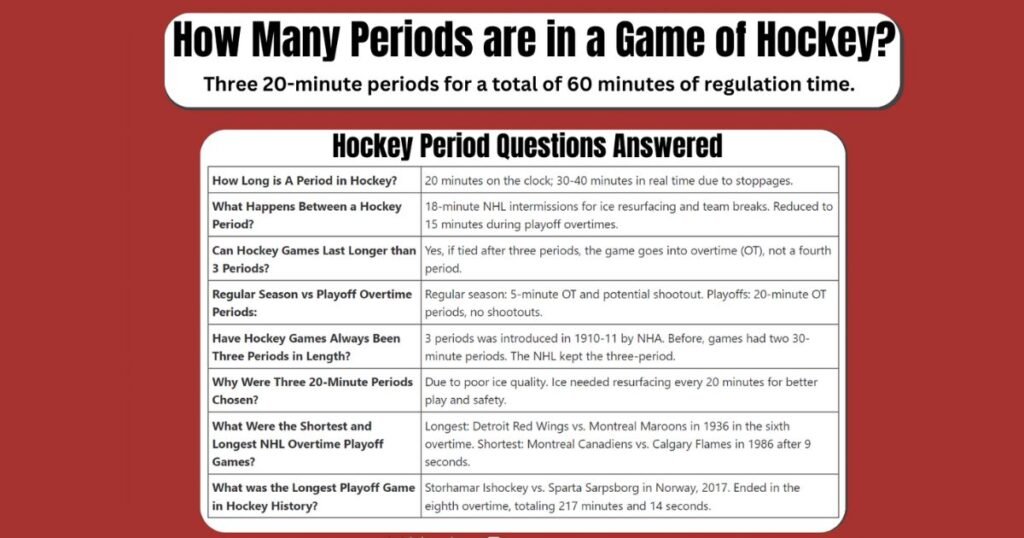
Another question that is often asked by beginners is the number of hockey periods. The games in professional hockey are three periods of 20 minutes each.
This is not a sport such as basketball or football. The three period format has its interesting build, whereas momentum can quickly transfer from one period to another.
Standard Hockey Game Structure
| Period | Duration |
| First Period | 20 Minutes |
| Second Period | 20 Minutes |
| Third Period | 20 Minutes |
The games are briefed with intermissions in between periods for re-organisation and strategy modifications.
How many periods in hockey or any sport can be a straight forward question, but periods greatly affect coaching work and player management. Coaches constantly check for fatigue as tired players make mistakes.
I’ve seen a lot of NHL games recently and noticed that the third period does not take as long as it seems. Aggression seems to be heightened later in the game often trying to equalise or defend a lead at the end of the game.
Understanding Hockey Player Positions
To fully understand How Many People Are on a Hockey Team, you also need to understand player roles.
- Forwards
Forwards focus mainly on offense. There are usually:
- 1 center
- 1 left wing
- 1 right wing
Centers often control puck distribution and defensive support. Wings usually attack aggressively and create scoring chances.
2. Defensemen
Defensemen protect their goal area and stop opposing attacks. They also help start offensive transitions.
3. Goalies
Goalies are arguably the most important players. They defend the net and often decide close games with incredible saves.
Watching elite goalies live can completely change how you view hockey. Their reaction speed feels almost unreal during high-pressure moments.
How Hockey Substitutions Work
One reason people get confused about How Many People Are on a Hockey Team is that substitutions happen constantly.
Unlike many sports, hockey allows “on-the-fly” substitutions. Players can leave and enter the ice during active gameplay.
This strategy keeps:
- Energy levels high
- Defensive pressure consistent
- Offensive speed aggressive
A coach usually rotates players in small groups called lines.
Typical Forward Lines
- First line
- Second line
- Third line
- Fourth line
Each line has a specific role. Some focus on scoring, while others specialize in defense or physical play.
Difference Between NHL and International Hockey Teams
The answer to How Many People Are on a Hockey Team can vary slightly depending on league rules.
- NHL Teams
Usually 20 active players.
2. International Hockey Teams
Often carry 22–25 players for tournaments. International competitions require larger rosters because games happen frequently over short periods.
During major tournaments like the Olympics, player depth becomes extremely important. Injuries and fatigue can affect performance quickly.
Why Hockey Teams Need Bigger Rosters
At first, beginners often wonder why hockey teams need so many players when only six remain on the ice.
The answer comes down to physical intensity.
Hockey requires:
- Explosive skating
- Quick acceleration
- Constant collisions
- Rapid direction changes
- Defensive recovery
Even elite athletes tire quickly under those conditions.
I once timed myself during a hockey training drill, and after just one minute of full-speed skating, my legs felt completely drained. That gave me a much better understanding of why NHL shifts remain short.
How Long Is a Hockey Game Compared to Other Sports?
Many sports fans compare hockey duration with basketball or football.
Comparison Table
| Sport | Average Total Viewing Time |
| Hockey | 2.5 Hours |
| Basketball | 2–2.5 Hours |
| Football | 3+ Hours |
| Soccer | 2 Hours |
Although the actual playing time is 60 minutes, hockey feels extremely fast because gameplay rarely stops for long.
Common Beginner Mistakes When Learning Hockey Rules
New fans often misunderstand several important hockey concepts.
Confusing Active Players With Full Roster
Many people think teams only have six players total.
Ignoring Line Changes
Substitutions happen constantly and affect strategy significantly.
Misunderstanding Penalties
Penalties temporarily reduce players on the ice.
Forgetting Goalie Pull Situations
Teams sometimes remove the goalie for an extra attacker late in games.
When I first started watching hockey seriously, I constantly lost track of substitutions. Over time, I realized line changes are one of the sport’s most strategic elements.
How Many Players Are on Youth Hockey Teams?
Youth hockey teams usually contain fewer players than professional teams.
Most youth teams include:
- 15–20 players
- 1–2 goalies
The exact number depends on:
- Age group
- League rules
- Team budget
- Ice time availability
Smaller rosters allow young players to receive more playing time and skill development opportunities.
How Many Periods in Hockey at Different Levels?
Although professional hockey uses three periods, lower-level leagues may adjust period lengths.
| Level | Period Length |
| NHL | 20 Minutes |
| College Hockey | 20 Minutes |
| Youth Hockey | 12–15 Minutes |
| Recreational Leagues | 15–20 Minutes |
The answer to how many periods in hockey usually remains the same, but the duration changes based on player age and league standards.
Personal Experience Watching Hockey Live
Watching hockey on television is exciting, but attending a live game feels completely different.
The first NHL-style game I watched live surprised me because:
- The speed felt much faster
- Player changes happened nonstop
- Physical contact looked intense
- Goalies reacted unbelievably quickly
Television cameras do not fully capture how exhausting hockey really is.
Once you see players sprinting across the ice repeatedly during a full game, the importance of roster depth becomes obvious.
Pros and Cons of Large Hockey Rosters
Pros
Large hockey rosters help teams:
- Reduce player fatigue
- Handle injuries better
- Maintain aggressive speed
- Improve tactical flexibility
Cons
However, bigger rosters can also:
- Increase salary costs
- Reduce individual playing time
- Create lineup competition
Still, most coaches prefer deeper rosters because hockey is physically demanding.
Expert Tips for New Hockey Fans
If you are just starting to follow hockey, these tips can help.
Watch Player Rotations
Notice how often lines change.
Focus on Positioning
Understanding player roles improves game knowledge quickly.
Learn Penalty Rules
Penalties dramatically change team strategy.
Observe Goalie Movements
Elite goalies control the pace of defensive play. The more games you watch, the easier hockey becomes to understand.
How Team Chemistry Impacts Hockey Success
Talent alone does not guarantee success in hockey. Team chemistry matters just as much.
Players must:
- Communicate constantly
- Trust defensive coverage
- Coordinate line movements
- Support offensive transitions
Great hockey teams move almost like synchronized units.
One thing I personally admire about hockey is how teamwork often matters more than individual stardom.
Why Hockey Continues Growing Worldwide
Hockey has expanded significantly outside traditional markets.
Today, hockey popularity continues growing because:
- Faster broadcasting technology improves viewing
- International stars attract global audiences
- Youth programs expand participation
- Social media highlights increase engagement
As an avid fan of the sport, you may be asking yourself a few early questions that seem extremely basic, like, ‘How Many People Are on a Hockey Team’ and then get enamored with the game.
Final Thoughts
Learn the game of hockey and how many people are on a hockey team will become apparent. Teams consist of six players on the ice at a time during play, although the large teams used in a professional level hoops team makes it easy to play.
Hockey is still a very rapid and fast game in the world. The intensity of the play, the line changes and frequent substitutions make watching it somewhat akin to a different sport.
With some of that information, watching a hockey game is far more enjoyable – hockey period times, for example, or the length of a hockey game. With time you start to pick up details relating to tactics, chemistry among players and what to expect from the coaching staff at a game that you wouldn’t witness during a casual viewing.
There’s no lack of action, excitement, energy and a great deal of fun in the game of hockey, from the rules you’ll find in the beginning, up to better understanding the sport.
Frequently Asked Questions
Q1. How many people are on a hockey team during a game?
During games in most professional hockey teams 20 players are on the ice.
Q2. How many players can be on the ice at any one time?
The teams play with between 6 and 7 players on the ice, with one player designated the goalie.
Q3. What is the length of time for a hockey game?
The length of a normal hockey game is approximately 2 ½ hours with breaks and intermissions.
Q4. How many periods are there in a hockey game?
Pro Hockey Games have 3 periods.
Q5. What causes hockey players to continually change?
Being active and concentrating are important in hockey, so they take turns to refresh themselves.
Q6. Would hockey teams be able to play without a goaltender?
Yes, occasionally the goalie is taken off for another attacker.
Q7. Does the size of hockey teams vary in the youth leagues?
Yes, the number of players on a youth hockey team is smaller and the time is shorter.
Related Articles: