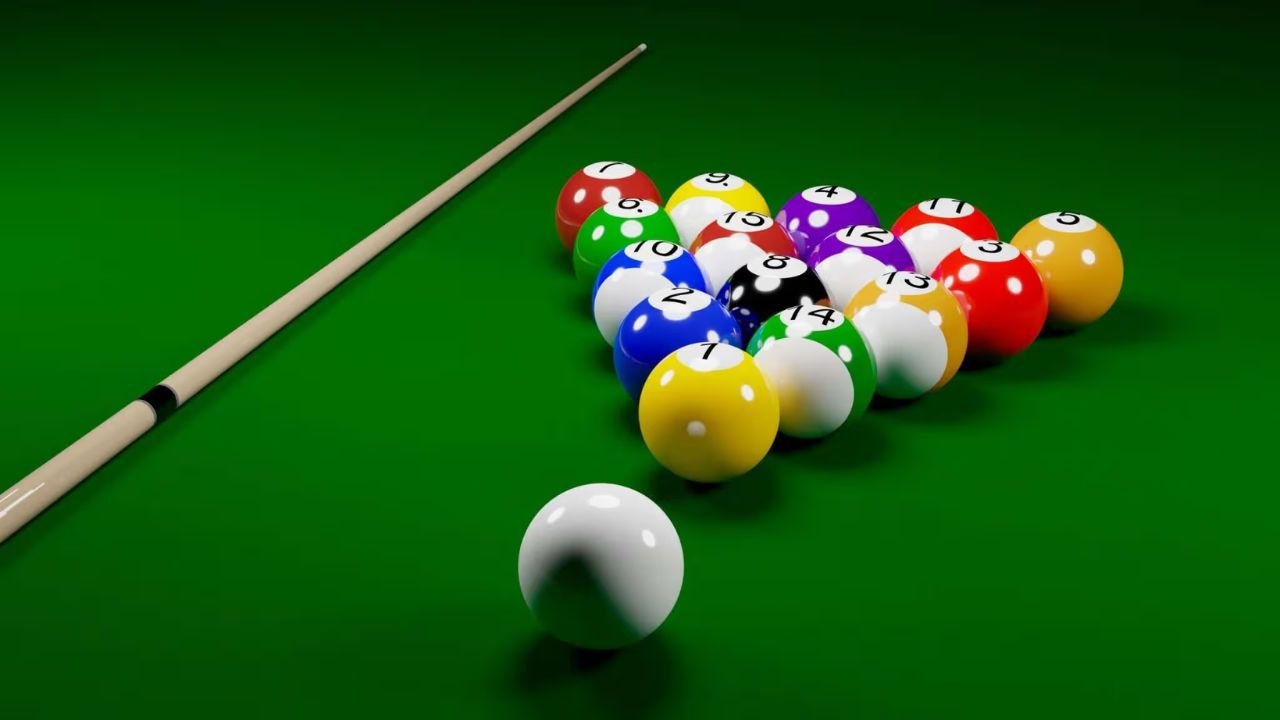
Billiards or pool is one of the most popular skill games in the world that is played in game rooms, bars and pool halls. You may be an amateur player or a professional, but you need to know the terms in the pool games and the terms in the pool table so that you can achieve and enjoy the game to the fullest.
Advanced players are also known to be confused by terminology, and errors are frequent when you are not familiar with what particular terms mean. The names of the balls, the components of the table and various types of shots; all this counts in the learning of this game. This guide will take you through the most essential terms of Pool Game Terms to make you play with a lot of confidence and effectiveness.
Pool Game Terms: The Basics
First of all, you should be familiar with the basic pool game terminology applied in any game:
- 8-Ball: This is a popular pool game that uses 15 balls as objects (7 solids, 7 stripes and the black 8-ball). To win, players should pocket all their assigned balls followed by 8-ball which they pocket legally.
- 9-Ball: This is a game that involves balls numbered between 1-9. Players have to pocket balls in a number sequence where 9-ball is the last ball to pocket to win the game.
- Cue Stick: This is the tapered stick that is used to hit the cue ball and make shots, also referred to as a cue.
- Chalk: Chalk is put on the tip of the cue to ensure that there is a friction between the cue and the cue ball so that the cue ball does not misuce.
- Cue Ball: The white ball that is used to hit object balls and play the game.
- Object Ball: Any ball that isn’t the cue ball. The goal of players is to pocket such balls in accordance with the game rules.
- Solids and Stripes: Object balls are separated into solids (19) and stripes (915) in 8-ball. All the players should collect all their assigned balls and then the 8-ball should be attempted.
- Bridge: A support that is used to hold the cue stick when the shot is missed. Players may play in their hand or a mechanical bridge.
- Rack: This is a triangular frame that is used to position balls tightly in the beginning of a game.
This is a list of the pool game terminologies that a beginner should know before playing. Being familiar with them prevents confusion and is used to play the game correctly.
Pool Table Terms: Parts You Must Know
It is also necessary to learn the terms in a pool table. All sections of the table are named in a particular way and knowing them will assist you in planning shots:
- Cushions (Rails): Padded sides of the table. Bank shots were possible since the cue balls bounced off cushions.
- Long Rails: The lengthy sides of the table. Angled bank shots are made towards long rails often by the players.
- Short Rails: The shorter sides. They are used as a guide in the positioning and aiming shots.
- Foot Rail: This is the end of the table on which balls are stacked. Usually, the 1-ball is placed here in 8-ball or 9-ball.
- Head Rail: This is opposite the foot rail. Some of these balls such as the 8-ball are placed in this position during racking.
- Pockets: There are six pockets with balls being sunk and these are four corner pockets and two side pockets.
- Sights (Diamonds): Marks on the rails to assist in shooting at the bank and to determine angles.
- Strings: Imaginary lines that run out of side pockets and to corners, assist in plotting of shots.
- Spots: Signs on the table surface that are utilized in certain games to denote certain positions of balls.
Here’s a simple table to summarize the main pool table terms:
| Pool Table Part | Description |
| Cushions / Rails | Padded borders for rebounding balls |
| Long Rails | Longer sides of the table for bank shots |
| Short Rails | Shorter sides for positioning and reference |
| Foot Rail | End where balls are racked |
| Head Rail | Opposite end from the foot rail |
| Pockets | Openings to sink balls (6 in total) |
| Sights / Diamonds | Markers for aiming bank shots |
| Strings | Imaginary lines for shot planning |
| Spots | Marked areas for cue ball or object ball placement |
Understanding these pool table terms ensures you can navigate the table with precision and plan your strategy effectively.
Advanced Pool Game Terms: Shots and Techniques
After getting familiar with the fundamentals, you must get acquainted with terminology used to describe various kinds of shots and playing tactics:
- Backspin (Draw): It is a spin that the cue ball is struck below the center. It causes the ball to move backwards after hitting an object ball or cushion.
- Call Shot: The players should state which ball they want to pocket and how. Otherwise, it can lead to foul.
- Break Shot: This is the initial shot in a game that separates the racked balls. Good break preconditions the game.
- Breakout Shot: This is to spread the balls that are clustered and then give a chance to make more shots.
- Bank Shot: The cue ball bounces off of one or more cushions then hits the target object ball.
- Jump Shot: This is done by hitting the cue ball downwards at an obstacle.
Being aware of these pool game terminologies ensures that the players can articulate and make complicated shots with precision.
Tips for Using Pool Table Terms in Gameplay
- Recognize the Ball Groups: Be able to tell whether you are playing solids or stripes.
- Play with Rails: Learn how to use long and short rails to do bank and combination shots.
- Plan with Strings and Sights: These are used as references to help in precision on difficult shots.
- Prevent Scratches: Rule of thumb is to always keep the cue ball under control so as not to provide a ball-in-hand to your opponent.
- Communicate Effectively: In case you play call-shot games, announce the ball and pocket you want to shoot at to prevent conflicts.
Through these strategies and knowledge of the terms of the pool games and the terms of pool table, beginners will be able to become a better player and truly enjoy the game.
How to Play Pool: Quick Guide
- Choose a Game: Play 8-Ball (solids vs. stripes, finish with 8-ball) or 9-Ball (pocket balls in order, finish with 9-ball).
- Rack the Balls: Set up balls in a triangle on the foot rail. Make sure they are tightly packed.
- Break the Rack: Decide who breaks. The break shot spreads the balls to start the game.
- Take Shots: Hit the cue ball with the cue stick to pocket object balls. Use backspin, bank shots, or English to control the cue ball.
- Follow Rules: Avoid scratches. In 8-Ball, pocket all your balls then the 8-ball. In 9-Ball, hit balls in order, ending with the 9-ball.
- Play Safe: Sometimes it’s better to position the cue ball for your next shot rather than going for a risky pocket.
- End Game: The game ends when a player legally pockets the final ball.
Tips: Chalk your cue, control the cue ball, use rails for guidance, and watch others to learn strategies.
Why Knowing Pool Game Terms Matters
The reasons for understanding pool game terms and pool table terms are many but some include:
- Clear Communication: To avoid any misunderstanding between players while playing a game whether it be competition or casual.
- Better Strategy: Knowledge about the table and various types of shots helps in better planning and strategy formation.
- Less Mistakes: Learning different terms such as scratch and call shot would help avoid fouls.
Increased Confidence: Beginners can feel like professionals once they become familiar with the terms related to pool.
Conclusion
Pool is not just a game; it involves skill, precision, and strategy to win a game. Thus, by studying various pool game terms and pool table terms, one can gain better knowledge about the game and even perform well with the help of it.
No matter whether one is an amateur player or an experienced one, knowing the above-mentioned terms would definitely help in enhancing their gameplay.